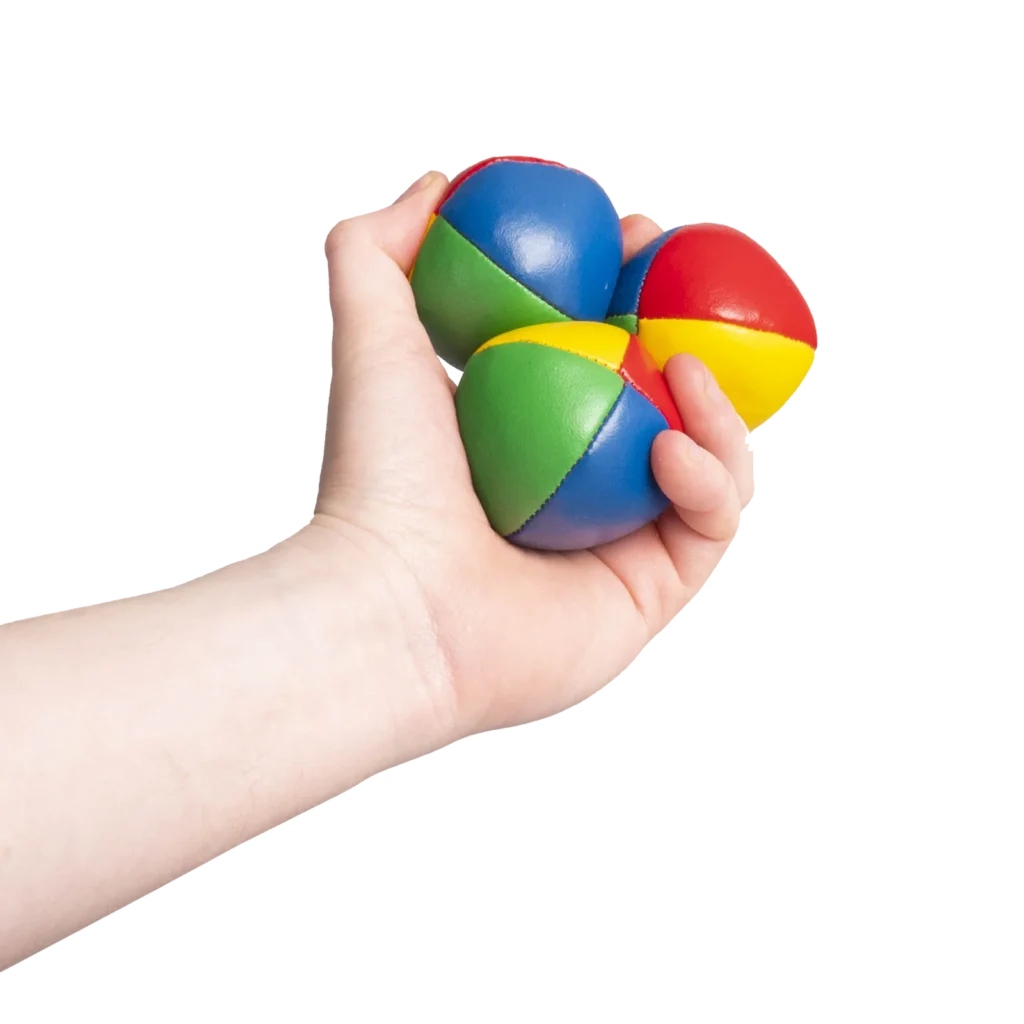
Everyone can toss a ball up and catch it. Many people can do that with two balls. When there are three balls it is officially called juggling. Personally, I can juggle three balls with lots of patterns. The world record for “toss juggling” that is balls successfully in a pattern, caught twice, is 11. The average presentation is like the Sonia Bravia advert of bouncing balls falling down the streets of Los Angeles. Our brains weren’t built for this. Juggling is fine for three balls (or facts).
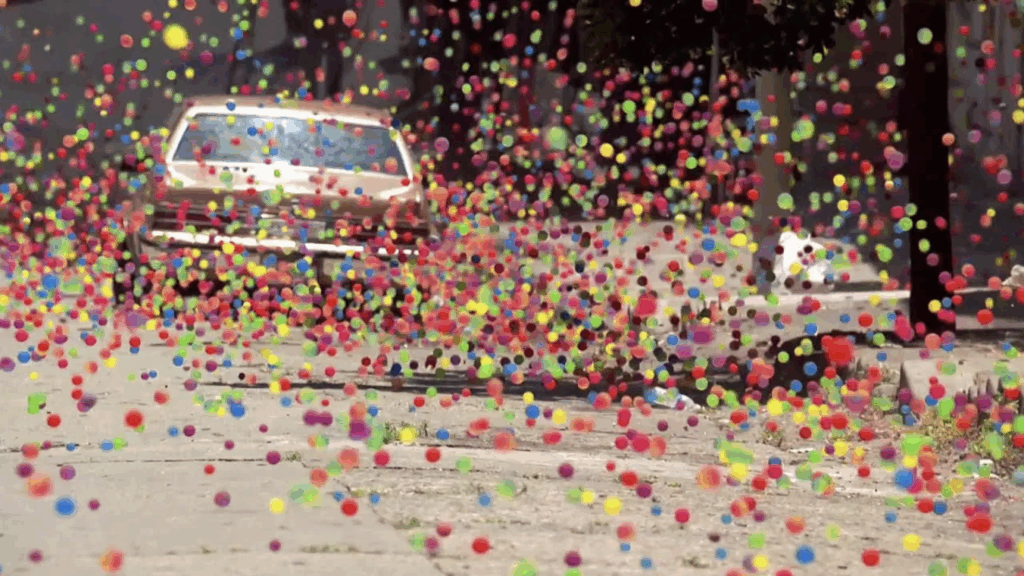
In the majority of presentations, there are at least five active processes: listening, reading, processing, watching and remembering. All of these are happening at the same time and often in direct conflict with each other. That just not how the brain works. Whilst juggling five balls is possible, that only happens in a fixed and predictable pattern. This does not happen in a presentation because of Cognitive Load theory.
Please watch this video of the advert and also enjoy the music!
The working memory is tiny. It can hold five to seven items. And that is only for seconds and if there is active concentration on retaining these items. If more load is added, whether that is more information, more conflict or a concept that needs active processing, this overload causes the juggling to fail. The facts fall. Working memory functions very simply. It is not endless. It is not passive. It has limits. If it is overloaded, it simply resets.
The average presentation, however, is not simply three facts, arranged in a simple, repetitive and easily controlled structure. It is more like the Sony Bravia advert; a cascade of colour as hundreds of thousands of bouncy balls cascade down the streets of San Francisco. Beautiful and mesmerising but individual balls are impossible to track, it simply becomes an experience. Beyond the first few scenes, even that overloads and it just becomes a single experience. This is the science of fail of presentations.
When your message is a seemingly undless list of facts, the processing ability of the audience is overloaded. When there is conflict of spoken message compared to text on the screen there is congnitive overload. When there is processing to be done to integrate new knowledge acquired and yet the speaker continues or there is text on the screen that distracts, there is congnitive overload. When there is a complex graph or data table that requires interrogation the process is overloaded. And all the time the presenter keeps talking adding more cognitive overload. It is not juggling that the audience is doing rather just observing, experiencing. This is science.
The science is clear about these principles. There is no room for debate or nuance or ignoring the science. The processing ability of the human brain is limited. The audience is not lazy. The nature of presentations overwhelms. The result is invisible but real. People drift, they lose the thread. They may take notes but they will never read them because it is impossible to keep up. They are forced into prioritising one input and virtually always that will be the text on the screen, blocking the auditory input as it is in conflict. Even worse, they will not remember what is on the screen. If it so detailed as to be a book, they will not be able to read it all. If it is bulletpoints they will not remember as they are required to process the gaps between points. This is cognitive overload.
This is what failure feels like, hypnotised, like a chicken. And it is repeated at every presentation, so that even that any initial interest is lost rapidly in recognition of standard slide formatting and delivery. Quiet. Familiar. Normal. No point in juggling, just experience it. Whilst you may be desperate to refute this, answer this simple question. What three facts did you gain from the last presentation you attended? Can you even remember what it was about?? Or did you just experience it?
The human brain was not built for presentations the way they are constructed and delivered. Juggling is only for balls, not hundreds or thousands of facts and concepts. Understanding the science will allow construction and delivery of presentations that can work. That is where change begins. That is where p³ begins.