At work I'm a Consultant Paediatric Surgeon. That involves Surgical Oncology, Neonatal Surgery and Trauma. There's also a lot of teaching and mentoring. None of this actually makes me particularly clever. I'm pretty heavily into improving presentations and long for the world to lay down the weapon of bulletpoints and embrace creative and engaging presentations. I lead presentation workshops and am currently working up a book on presentations. I did a wee thing at TEDx Stuttgart in 2014 of which I'm quite proud https://www.youtube.com/watch?v=qFza3W87eDg Outside all of that I struggle to keep fit, cycle a bit and the odd triathlon. I'm a father, singer, laugher, learner, sharer, blogger, thinker, strummer and much more.

Author Archive: ffolliet
Never about slides
The future of presentations is not about slides, it never was. The future of presenting is not about more tech, more ai, more polish, it is about clarity of message, audience engagement and ultimately, effective communication. It was never about…
Read more
It’s too important
It might be a research funding panel, a conference plenary or your first research presentation but you want to get it right. It’s too important. So you add more: more slides, more bulletpoints, more references because it’s too important. This…
Read more
Being an expert
Expertise in a topic does not make you an expert in presentation. You may know more than anyone else in the room. That does not necessarily mean they will understand by reciting that. Nor does not mean they will remember….
Read more
Kintsugi
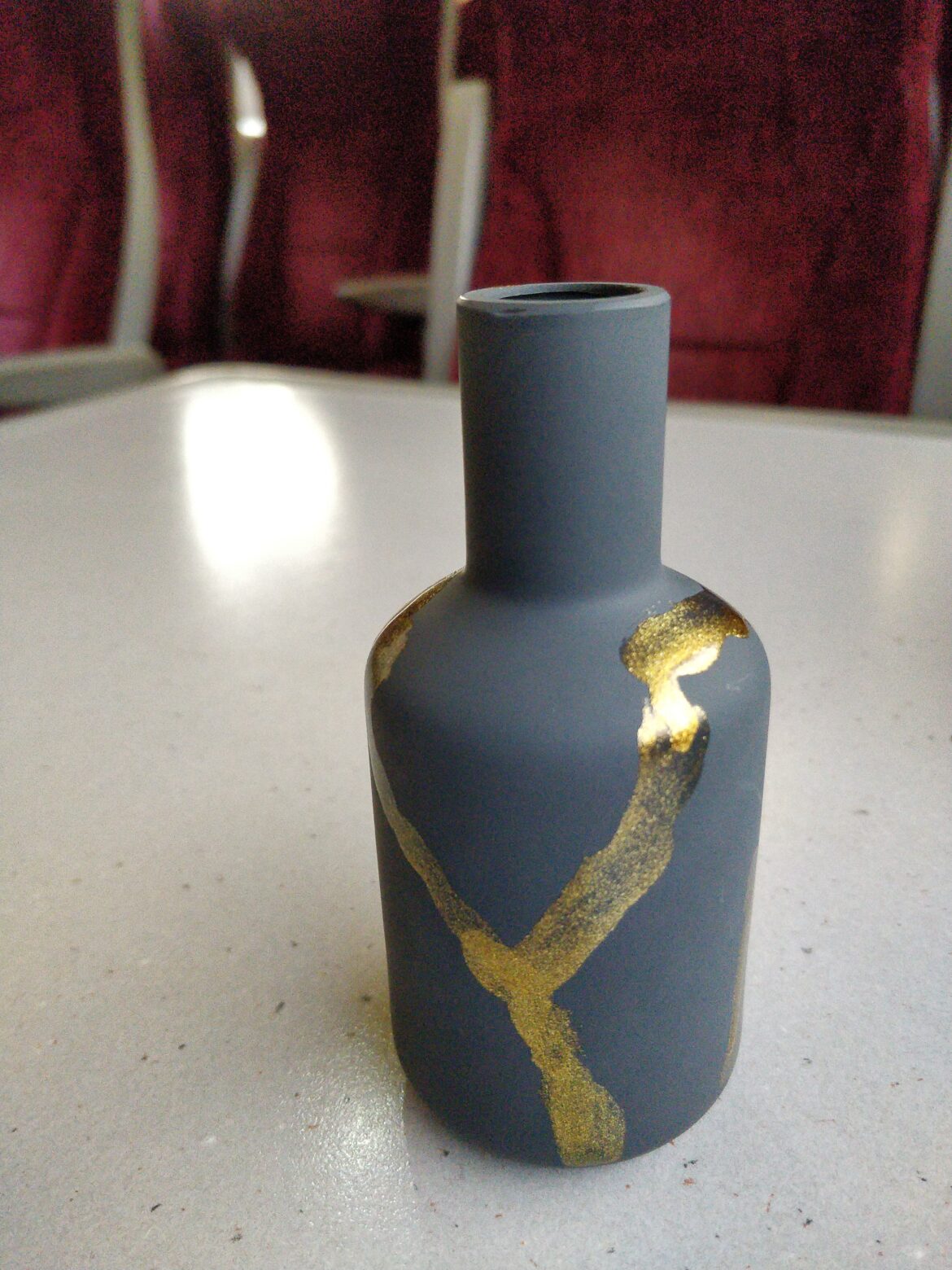
The way presentations are currently constructed, delivered and received is not the result of laziness on the part of presenter or audience. Presentations are built with effort, intention and time but with a concept that breaks the result. The Japanese art of kintsugi recognises the value of a piece of pottery and in its damage, it is repaired, often with gold. Presentations are broken but should not be thrown in the trash. They can be repaired with kintsugi and returned to intended function and experiences of real value.
Useless
Most presentation feedback is useless. “Thank you for your excellent presentation. I very much enjoyed it.” This really is not the critical review you hoped it would be. Feedback needs to be actively sought, shared in the spirit of improvement and as part of a conversation. Vague, polite platitudes unsolicitedly offered and based on what the listener felt are useless when it comes to development of presentation skills.
To be or not to be
Most of us have heard, even recited, the start of the soliloquy from Hamlet. “To be or not to be? That is the question.” Few of us would consider that recitation had any impact. Anyone can download and read the piece. It isn’t the same as being delivered by an actor, on stage, in costume and in the moment. A presentation is not simply a script, read out on a stage. The delivery of a presentation (p3) demands much more than that.
I know
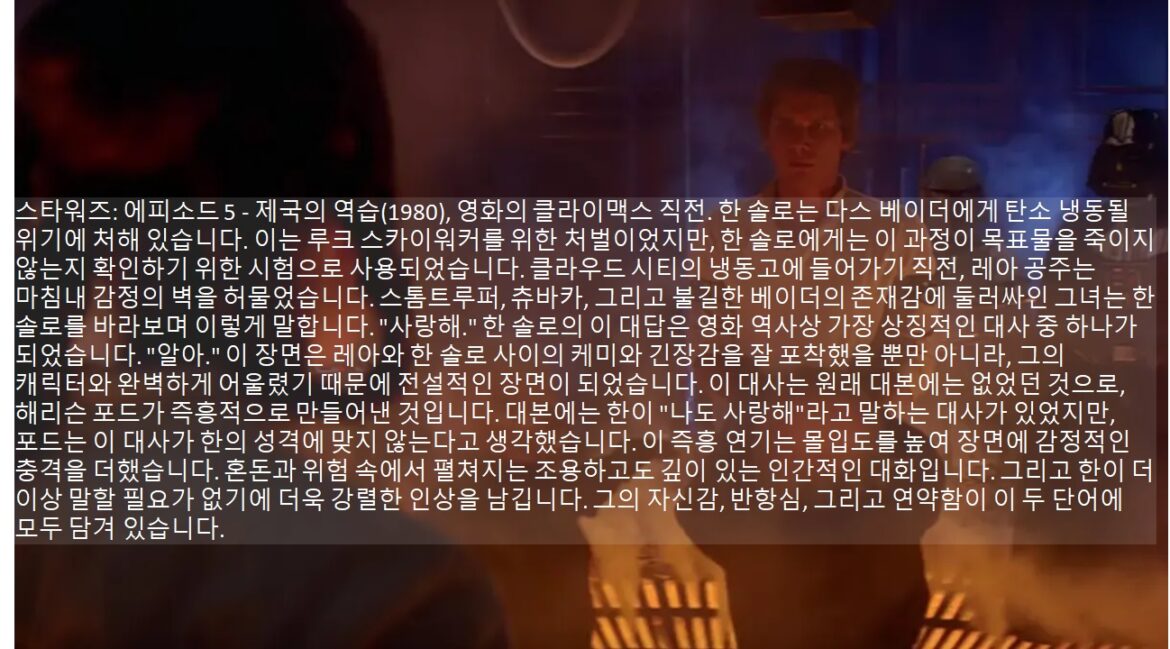
In the Star Wars film, The Empire Strikes Back, there is a dramatic and romantic moment where Princess Leia calls to Han Solo as he is about to be immersed in Carbonite. “I love you!” she calls. His response has become iconic. The slide below shows how most presentations would relate that scene as below. “I know”. Subtitles are not required. Like your powerpoint
Change
So now what should we do once we have recognised that there is glitch in The Matrix? Change. Having seen that we fall into the trap of using the slidewear to construct a powerpoint rather than a message, what should we do? Understanding the Presentation Paradox that we do what we hate in the construction and delivery of a presentation, what should we do? Seeing that science describes the problem, even if we see the problem all around us so now what should we do? Change.